Category: Leadership Field Notes

Firsthand observations and personal reflections on hospitality, workplace dynamics, and leadership, connecting real experiences to broader organizational lessons.

  • Quality Inn — Coordination Failure and the Fragility of Trust

    Quality Inn — Coordination Failure and the Fragility of Trust

    November 2024

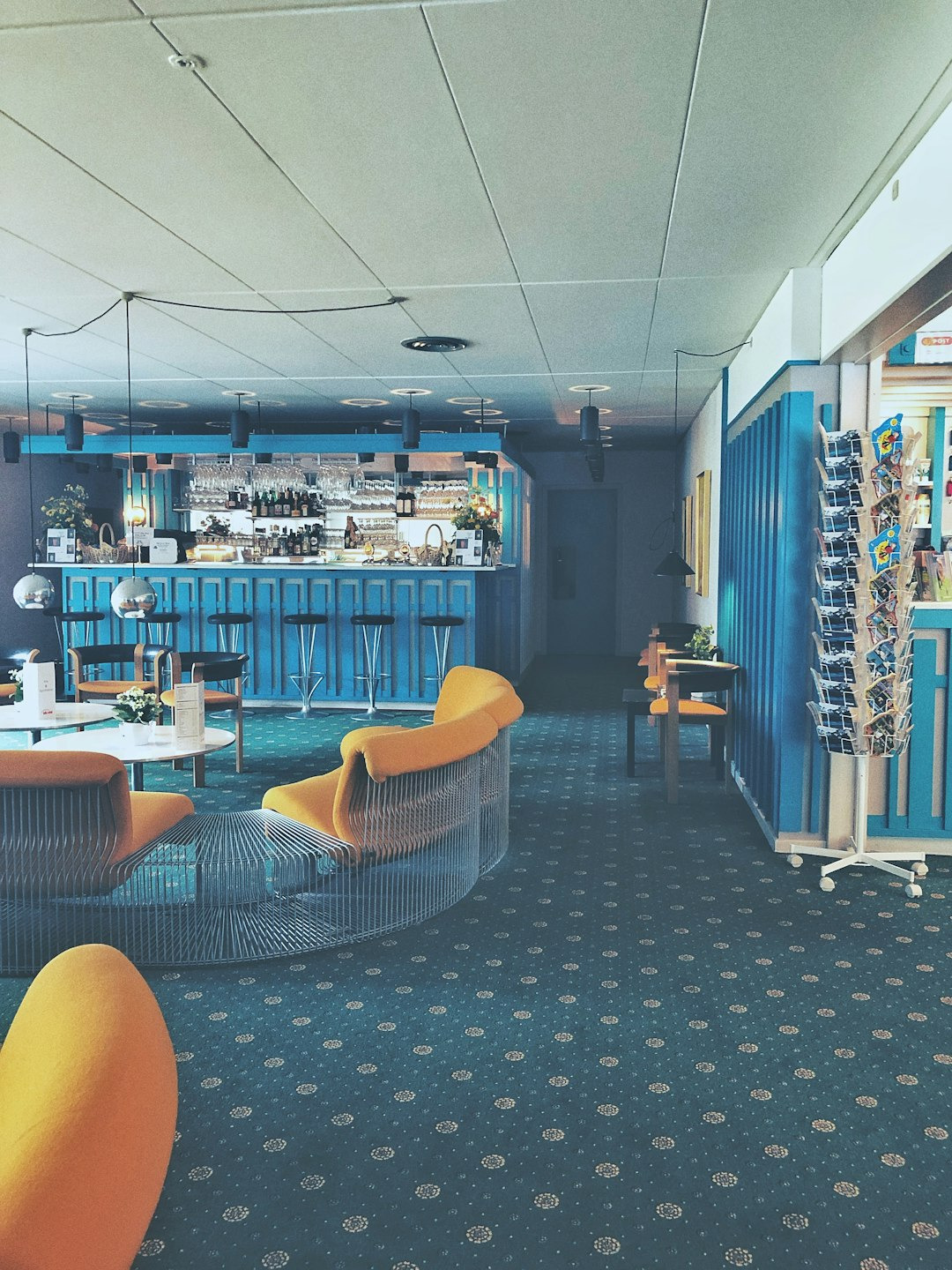
    The lobby seemed smaller than the one at the other property in the same brand family. The air carried that familiar blend of industrial cleaner and aging carpet fibers. It felt operationally quiet, but not smooth—more like a system running because the community needed it to, albeit without supervision. Something many of us needed, even if we didn’t want it.

    In my corner of the world, winter had become a logistical and life threat rather than an inconvenience. I’d recently secured entry-level employment but was still alternating between short motel stays and nights in a freezing vehicle. Choosing this property was a survival decision, not a preference.

    Check-in was easy but invasive for my taste. They stored a copy of my ID, unlike the other property’s staff, who simply verified it, but explained it was to ensure they knew who occupied each room. Their politeness and willingness to answer questions reinforced the trust signals I’d experienced at the other property.

    However, within twenty-four hours, that perception of stability fractured. After returning from work, I found that housekeeping had entered my room under the assumption that I had checked out. My belongings—cell phone charger, pajamas, and personal soaps—had been removed. Cleaning supplies I had personally purchased had disappeared.

    In retrospect, this detail felt almost symbolic. When communication breaks down, guests can end up bearing the consequences of problems they had no part in creating.

    The father–daughter housekeeping team involved was polite and visibly concerned once the misunderstanding surfaced. They were not malicious actors. They were working with incorrect information.

    This experience illustrates how quickly trust built through professional, courteous interactions can be undermined when departments do not maintain accurate, consistent information. The problem was not simply that a mistake occurred, but that the information guiding decisions that affected me did not reflect the reality of my stay.

    Guests rarely evaluate mistakes in isolation. They also consider how the property responds and whether they can feel confident that the same problem will not happen again. Although staff members apologized, my cleaning supplies were never returned, and the experience left a lasting impression.

    Trust, once disrupted, requires more than an apology to be reaffirmed. It requires giving guests a reason to believe the underlying problem has been addressed.

    Business Implications

    Accurate room-status information matters because it affects housekeeping, front-desk decisions, room availability, and guest privacy. When employees act on outdated or incorrect information, even a well-intentioned decision can disrupt a guest’s stay.

    These errors can also create additional work for employees, delay room readiness, and require management time to resolve complaints. When similar problems recur, they may point to a broader communication issue rather than an isolated employee mistake.

    For hotel leaders, the challenge is ensuring that departments can rely on accurate information when making decisions that affect occupied rooms and guests’ belongings.

    What Leaders Could Monitor

    • Guest complaints and service recovery: Monitor recurring concerns involving room access, privacy, belongings, and communication between departments when requests are made
    • Room-status discrepancies: Track errors and patterns involving whether rooms are reported as occupied, vacant, or ready for service
    • Housekeeping productivity: Look for patterns regarding interruptions and delays associated with inaccurate room information
    • CPOR (Cost per Occupied Room): Review operating costs alongside housekeeping productivity and avoidable rework
    • GOPPAR (Gross Operating Profit per Available Room): Assess overall operating profitability alongside costs and revenue trends. Note: This metric provides broader business context; it does not establish the financial impact of a particular incident

    The Management Move

    Treat accurate room-status information as a shared responsibility across departments. Employees need reliable information to make decisions that protect guest privacy, support efficient operations, and prevent avoidable disruptions.

    Leadership Takeaway

    Operational efficiency depends on accurate information reaching the people who need it, when they need it. When communication fails, the consequences can extend beyond the immediate mistake—to the guest’s trust in the entire property or brand.

  • Quality Inn — Trust Signals in Limited-Service Environments

    Quality Inn — Trust Signals in Limited-Service Environments

    June 2024

    The lobby was brighter than the previous one, but it was not the lighting that stood out. It was the pacing. The front desk agent moved with quiet certainty, not urgency. The coffee station was modest yet well-organized; lids were stacked neatly, signage was visible, and breakfast hours were clearly posted. The environment communicated predictability before words were exchanged.

    I had been transported there unexpectedly by a stranger who witnessed my traumatizing and dehumanizing interaction at another property. I arrived emotionally depleted. This hotel did not change my circumstances. It changed my perception of operational safety. Trust formation in budget tiers is rarely driven by product. It is driven by behavioral consistency.

    Guests in vulnerable or transitional circumstances often evaluate properties on whether operational signals suggest reliability, not on aesthetic differentiation. When micro-behaviors align across shifts and departments, the guest’s mind shifts from vigilant to trusting.

    This has direct implications for:

    • Repeat-stay probability
    • Guest review sentiment
    • Staff-guest conflict frequency
    • Long-term brand credibility within price-sensitive segments

    Limited-service properties have a unique opportunity to strengthen the guest experience through details that are easy to overlook. In smaller, more intimate settings, clear signage, accessible information, and consistent communication can help guests understand what to expect and how to navigate the property. When everyday interactions are handled consistently, behavioral predictability becomes imperative. It can shape guest perceptions and, over time, guest loyalty.

    This interaction illustrates a key leadership principle: Trust is not created through brand promise statements. It is engineered through operationally repeatable human signals.

    Business Implications

    In limited-service hospitality, operational reliability does not depend exclusively on the physical product. Clear information, organized shared spaces, and professional employee interactions can help guests understand what to expect and navigate routine activities with greater confidence.

    These details may influence how guests interpret a property’s broader reliability.

    Leaders should make it a point to learn whether the intended experience is articulated through the information guests encounter in each space.

    What Leaders Could Monitor

    • Guest satisfaction and online review sentiment: Look for recurring themes involving staff helpfulness, clarity, professionalism, and the arrival experience
    • Repeat-stay indicators: Assess whether guest return behavior supports the property’s retention goals
    • ADR (Average Daily Rate), occupancy, and RevPAR (Revenue per Available Room): Monitor pricing, demand, and room-revenue performance

    The Opportunity

    Limited-service properties can strengthen guest confidence by providing details that make the stay feel predictable and easy to navigate.

    Clear information, organized shared spaces, and steady frontline communication are differentiators that do not require major capital investment.

    The opportunity is to make these signals consistent enough to support the property’s intended brand experience throughout the guest journey.

    Leadership Takeaway

    A brand promise becomes credible through the ordinary details guests encounter repeatedly—not merely through the words used to describe the brand.

    Observations
    ( Senior Leadership Field Notes)

    Editorial Note:

    These essays draw on my personal experiences and recollections, informed by my academic background and professional experience across hospitality operations. I hold a Bachelor of Science in Organizational Leadership. My professional experience includes hotel and restaurant operations, communications, documentation, shift management, workflow coordination, and process improvement.

    The articles contain my own recollections, interpretations, and professional reflections. My humanity-first analysis reflects my perspective and is not an independent audit, investigation, or comprehensive assessment of any organization.

    My interpretations should not be taken as statements of an organization’s policies, intentions, or general practices beyond the specific experiences described. Individual employees are not named, and identifying details are omitted where appropriate to protect privacy.

    These essays are intended for professional reflection and discussion.

  • Red Roof Inn — Discretion, Liability, and the Human Element

    Red Roof Inn — Discretion, Liability, and the Human Element

    June 2024

    The fluorescent lights vibrated faintly above the front desk, and a vending machine hummed with mechanical indifference. The air carried the scent of burnt coffee drifting from an aging thermal container beside two paper cups. It was late morning, but the lobby felt suspended between operational routine and emotional fatigue. A dynamic I had begun to understand intimately.

    I had recently lost housing and was navigating the early weeks of homelessness. I was moving between cheap motels and trying to regain employment. I had no vehicle, limited financial resources, and was waiting for transportation that might or might not arrive. I had been seated long enough to be visible to operations.

    When the front desk agent returned, he faced an immediate decision constraint. I was not a paying guest. I was not disruptive. But I did not fit the transactional rhythm the property was designed to support. He told me I needed to leave or he would call the police. Loudly. With profanities that would make a sailor blush.

    From my perspective, the interaction prioritized enforcement over understanding my circumstances. These moments can reveal questions about leadership, employee discretion, and how service expectations are communicated. Thankfully, the property owner was nearby and rushed over. He chose temporary tolerance. Then, a guest who was less than impressed with the encounter chose private intervention, offering transportation to another hotel and a $20 bill.

    Three distinct decision responses emerged within the same operational environment. This moment reflects a core principle of how I analyze hospitality: the guest experience is shaped less by documented standards and more by how front-line employees interpret ambiguity in real-time under operational pressure.

    This variability creates instability. These moments often reveal a misalignment between brand intention and operational reality — a consistency strain many properties experience long before it becomes a performance metric.

    Business Implications

    Inconsistent frontline responses can undermine guest confidence, increase the potential for complaints or escalation, and create reputational and operational risks.

    For hotel leaders, the challenge is balancing employee judgment, guest dignity, property safety, and consistent policy application. When employees lack clarity about their decision-making authority, the guest experience may depend more on individual interpretation than on a consistent management approach.

    Recurring service failures may contribute to guest dissatisfaction and additional service-recovery demands. Leaders can examine these patterns alongside operating costs and broader financial performance.

    What Leaders Could Monitor

    • Guest complaints and review sentiment: Look for recurring feedback involving employee conduct, policy enforcement, and difficult guest interactions
    • Incident frequency and escalation patterns: Monitor recurring situations that require management intervention
    • Service-recovery time and costs: Assess the staff time, documentation, and follow-up associated with resolving incidents
    • GOPPAR (Gross Operating Profit per Available Room): Review broader operating profitability alongside service-recovery and operating-cost trends. Individual incidents should not be assumed to cause changes in GOPPAR
    • RevPAR (Revenue per Available Room) and occupancy: Use these as broader measures of room-revenue performance and demand, not as direct measures of interaction quality

    The Management Move

    Clarify the boundaries of frontline discretion so employees can respond to unique situations with consistency, sound judgment, and proper escalation. Effective leadership makes room for human judgment without leaving employees to navigate consequential decisions entirely on their own.

    Leadership Takeaway

    Ambiguity does not remain contained. It compounds. Consistency is not achieved through repetition alone; it is cultivated through clarity regarding authority and communication.